Digitalisation of building permits has been identified as a critical enabler for accelerating housing delivery, ensuring building safety, and supporting climate adaptation goals. The Digital Building Permit Conference 2026 brings together the international community to explore the potential of automation and optimisation in the management of building and city data.
Research and practice in digital building permitting have matured significantly in recent years, with a growing number of cross-border initiatives, particularly at the European level, as well as local projects now delivering tangible results. Following three previous editions, most recently in Vienna in December 2025, the conference series has established itself as the leading global scientific forum on the digitalisation of building permitting, attracting researchers, public authorities, and industry representatives from over 30 countries.
Organised by the Technical University of Munich (TUM), together with the EUnet4DBP, OGC, and several supporting organisations, DBP26 will provide a platform for digital building permit stakeholders to meet, discuss, and collaborate on the current state of research, developments, and implementations. The conference is strategically scheduled alongside BIM World Munich 2026 (24–25 November), allowing attendees to benefit from both events in a single trip.
The scientific programme will include peer-reviewed research paper sessions, international keynotes, thematic panels, workshops, demonstrations of research prototypes, and practice talks. Peer-reviewed contributions will be published as open-access proceedings.
Multidisciplinarity and inter-sectoral collaboration are key to addressing the complex challenge of building permit digitalisation. The conference brings together civil engineering, computer science, geospatial sciences, administrative science, and law, and actively welcomes public authorities, including municipal building departments and regional planning offices. The programme will host a wide range of contributions and activities, from research to practice, with a significant part dedicated to users and stakeholders, to better understand the challenges of solution adoption and uptake.
Co-located Event: OGC iDays 2026
OGC iDays 2026 will take place in Munich, Germany, on 23–24 November 2026, immediately preceding the Digital Building Permit Conference 2026 (25–27 November 2026). Participants can take advantage of a full week of learning, collaboration, and networking across the geospatial, built-environment, infrastructure, and policy sectors.
This is an in-person only conference — no hybrid or remote participation.
Objectives
Share progress in digital building permitting across Europe and the world.
Engage policy developers and regulators in the digital transformation of building permit processes.
Demonstrate the benefits and value of building permit digitalisation through concrete examples.
Present solutions and components from researchers, developers, and implementers.
Encourage municipalities and public authorities to bring their perspectives and expertise.
Address outstanding challenges, including legal, ethical, and trust-related aspects.
Share developments in data, standards, and technology for digital building permits.
Keynotes
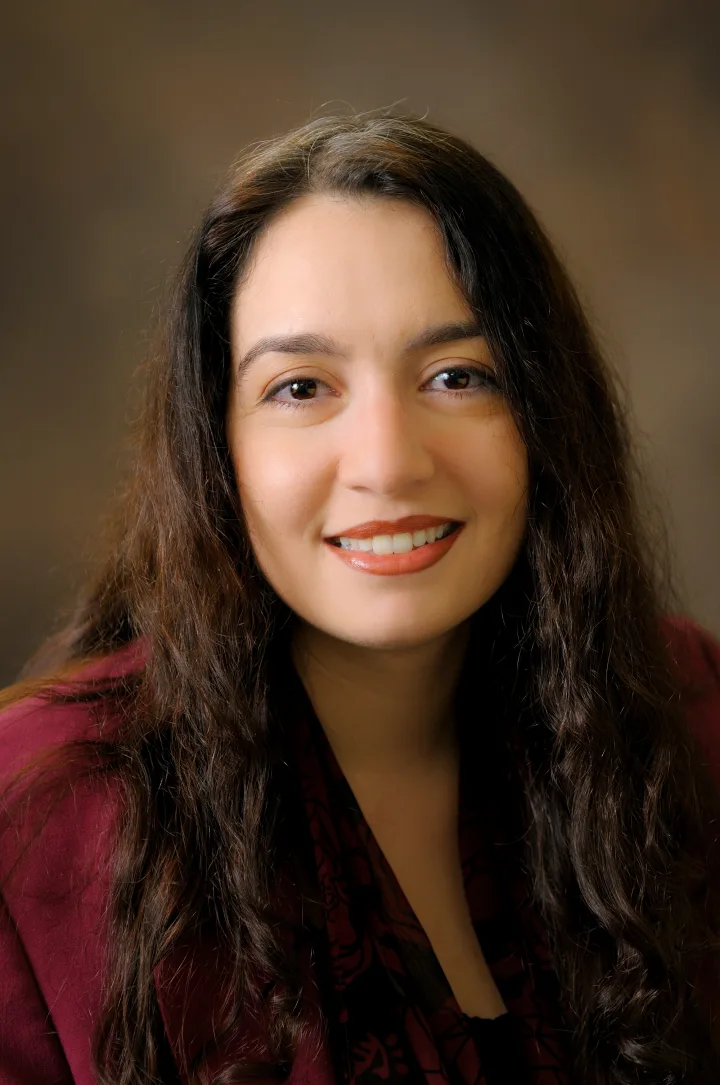
Nora El-Gohary
University of Illinois Urbana-Champaign, USA
“Artificial Intelligence for Automated Compliance Checking and Digital Building Permitting”
Nora El-Gohary is a Professor in the Department of Civil and Environmental Engineering at the University of Illinois Urbana-Champaign, with a distinguished record of scholarship and leadership in artificial intelligence (AI), data analytics, and automated compliance checking for the built environment. Her research focuses on AI-driven methods to support the design, permitting, construction, operation, and maintenance of sustainable and resilient buildings and infrastructure systems. Her work integrates natural language processing, generative AI, computer vision, information extraction, information modeling, and multimodal data analytics for the built environment.
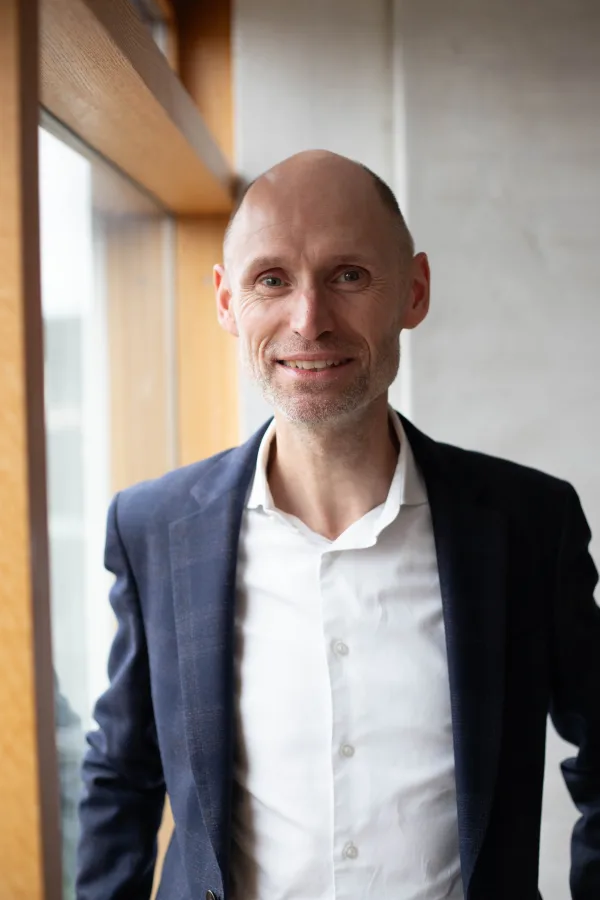
Ulrik B.U. Røhl
Copenhagen Business School, Denmark
“What is good administration, and what does it mean for digital building permit processes?”
Ulrik B.U. Roehl is an Assistant Professor at the Department of Digitalization at Copenhagen Business School in Denmark. He holds a PhD in digital government from Aalborg University in Denmark, and is former Chief of Staff at KOMBIT Ltd., a non-profit corporation fully owned by Danish municipalities supporting their use of digital technology. In his research, he focuses on digital government, automated decision-making, good administration and public management. He has previously worked in Danish central government, and is also a research fellow at the Public Governance Institute at Katholieke Universiteit Leuven in Belgium. In 2023, he was awarded the Academy of Management’s Adam Smith Tercentenary Best PhD Dissertation Award.
Li Lian Ngiam
Building and Construction Authority (BCA), Singapore
A transformation journey for building construction approvals in Singapore
Li Lian is a Director at the Building and Construction Authority (BCA), a government agency which co-led the CORENET X project in Singapore. She oversees the development of the CORENET X system, which serves as a one-stop shopfront for Singapore regulatory submissions for building works, and leads a team of product owners in ensuring that the CORENET X system meets the business needs for both the construction industry users and regulatory agencies in Singapore.
Conference Topics
Legislative System
Capturing regulatory content
Ambiguity and subjectivity in regulations
Public policy, mapping, archive and records
Sustainability and environmental checks supported by digital building permits
Energy performance contracts and use cases related to retrofitting of existing buildings
Procedural System
Quality of applicant submissions
Implementation steps for transition
Privacy in digital building permit
Digital compliance
Organizational System
Social, environmental and business case for digital permitting
Legal, credibility and ethical challenges
Training and education for digital building permit
Applications of digital building permit in municipalities
Advantages and benefits of digital building permit
Technological System
Technologies for supported and automated compliance checking
Current implementations
Checking software demos
Interoperability and software architectures and components for digital building permits
Data, standards and ontologies in digital building permit
GeoBIM
Key Dates
Conference: 25–27 November 2026
Scientific Papers
Abstracts (optional)(closed)8 April
Abstract decision notifications(closed)22 April
Submission of full paper(closed)15 June (23:59 CET)
Notification of decision (acceptance with comments)(closed)15 July
Camera-ready papers(closed)7 August (23:59 CET)
Author registration and early bird deadline(closed)15 September
Practice Track
Abstract submission(closed)31 August
Early bird registration and abstract notification(closed)15 September
Scientific Posters
Extended abstracts(closed)1 August14 August (23:59 CET)
Notification of decision (acceptance with comments)(closed)31 August
Early bird registration and camera-ready abstract and poster(closed)15 September
For detailed submission guidelines and templates, visit the Submission page. Submit your contributions via ConfTool.
Venue
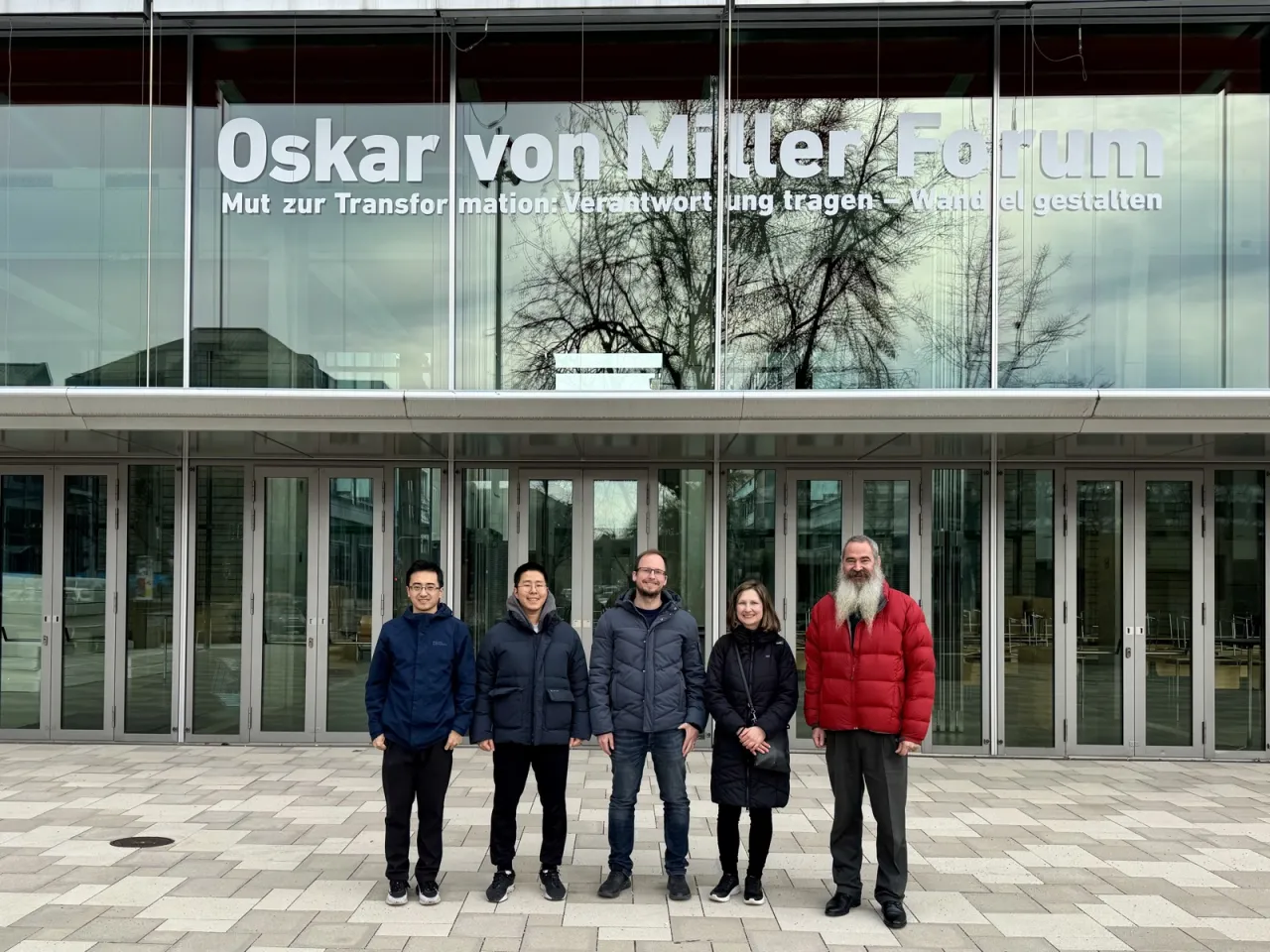
Oskar von Miller Forum, Oskar-von-Miller-Ring 25, Munich, Germany
Accommodation
November is a busy period in Munich. Early booking is strongly recommended.
There are many hotels in different price classes in the city centre, within walking distance to the venue.
Getting There
The nearest U-Bahn station is Odeonsplatz (lines U3, U4, U5, U6), about a 5-minute walk to the venue.
From Munich Airport: take S-Bahn S1 or S8 to Marienplatz, then U3 or U6 direction Münchner Freiheit to Odeonsplatz.
From Munich Hauptbahnhof (main station): take U4 or U5 to Odeonsplatz (approx. 5 min).
Plan your journey at mvv-muenchen.de or use the MVV app/DB Navigator.
Discover Munich
Munich offers a wealth of attractions — from the historic Marienplatz and Englischer Garten to world-class museums and vibrant beer gardens. Find out more at muenchen.de.
Contacts
Conference Chairs
Judith FauthTechnical University of Munich, Germany
Robert AmorUniversity of Auckland, New Zealand
Local Organisation
Stefan FuchsTechnical University of Munich, Germany
Jiabin WuTechnical University of Munich, Germany
Yonghan KimTechnical University of Munich, Germany
Christoph VollmerMinistry of the Interior, Construction and Digitalisation Mecklenburg-Vorpommern, Germany